Earth's resources
邊玩邊學
回答這些題目賺取能量,接著就能釣魚、探索。不需要帳號。
給教育者: 為 Earth's resources(KS3 Science、Chemistry)準備好可直接使用的課程投影片, 複習筆記, 圖表——用於你的課程,或把這個主題當成互動班級活動,讓學習者以即時遊戲的方式進行。
課程筆記
Finite Resources
- Earth has a finite number of resources, meaning they are limited and could run out.
- Examples include water, land, fossil fuels, building materials, and minerals/ores.
- Fossil fuels (coal, oil, gas) are finite because they take millions of years to form from decayed plants and algae.
Sustainable Use
- Using resources sustainably means not overusing them so they are available for future generations.
- We should also look for alternative resources to reduce dependence on finite ones.
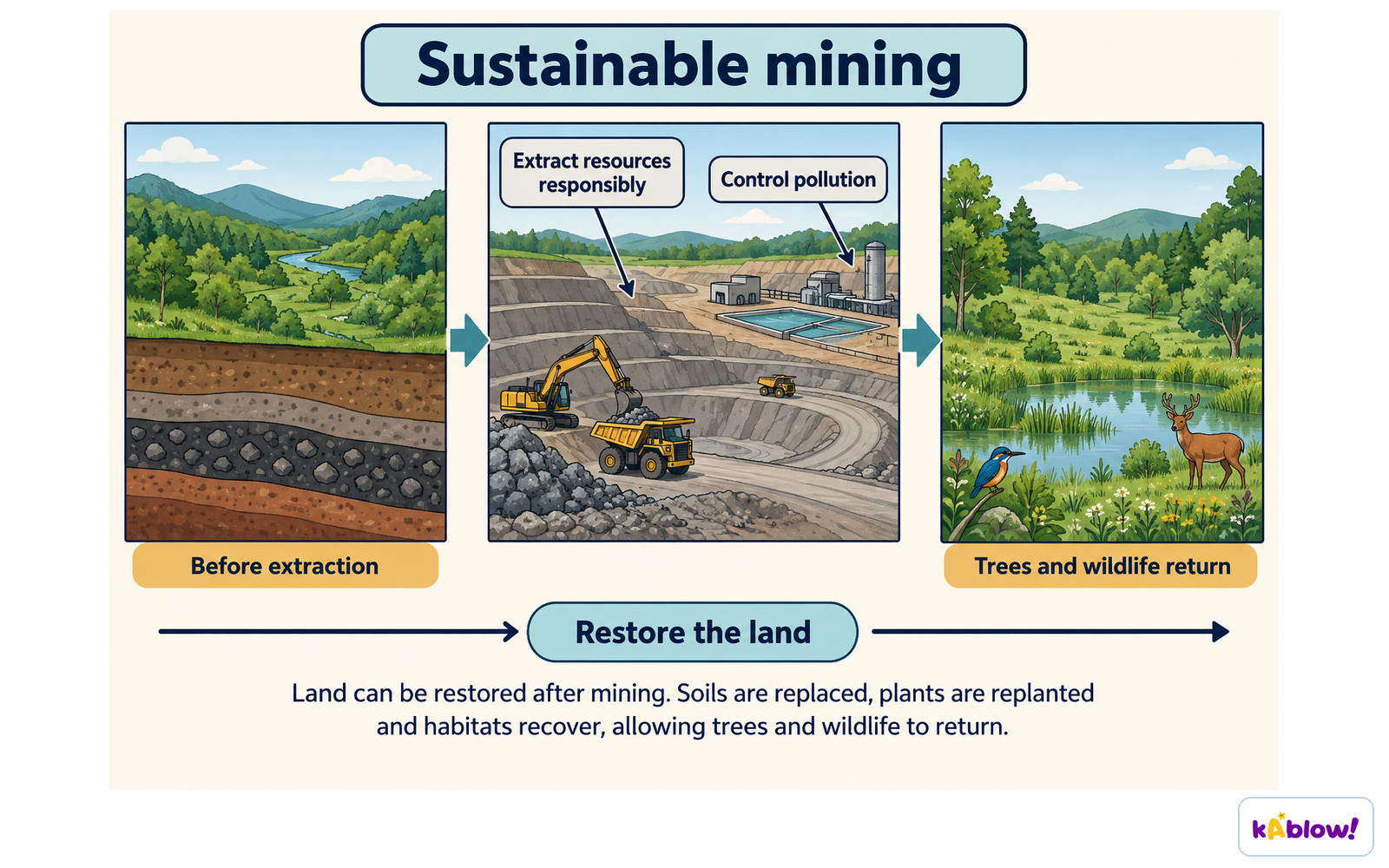
Sustainable mining includes controlling pollution and restoring soil, vegetation and habitats after extraction.
Reduce, Reuse, Recycle
- Reduce: cut back on production to limit waste.
- Reuse: use the same items again.
- Recycle: turn old materials into new products.
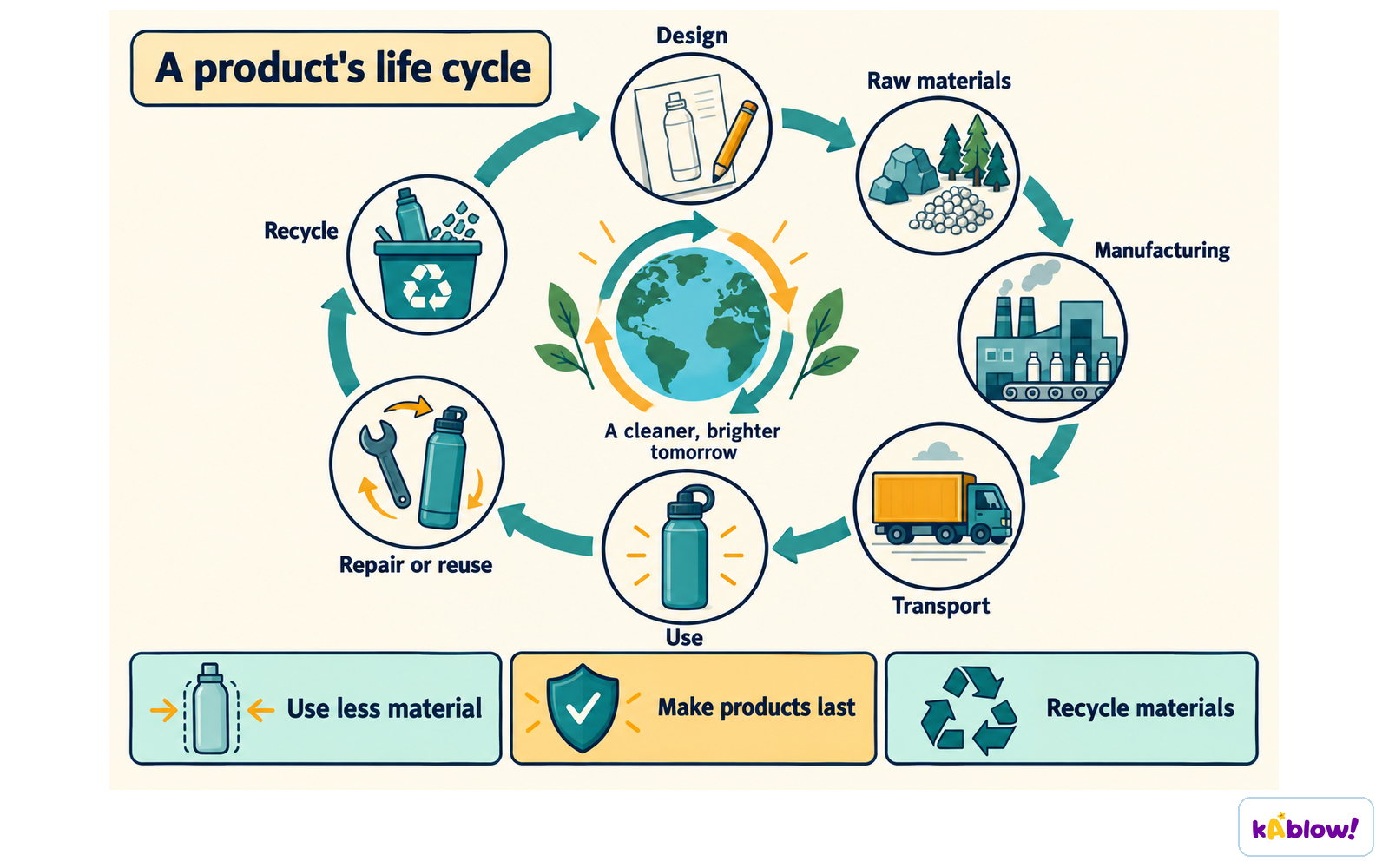
Reducing material use, repairing, reusing and recycling help conserve resources throughout a product’s life cycle.
Recycling Examples
- Plastic is made from oil (a fossil fuel); recycling plastic saves energy and is cheaper.
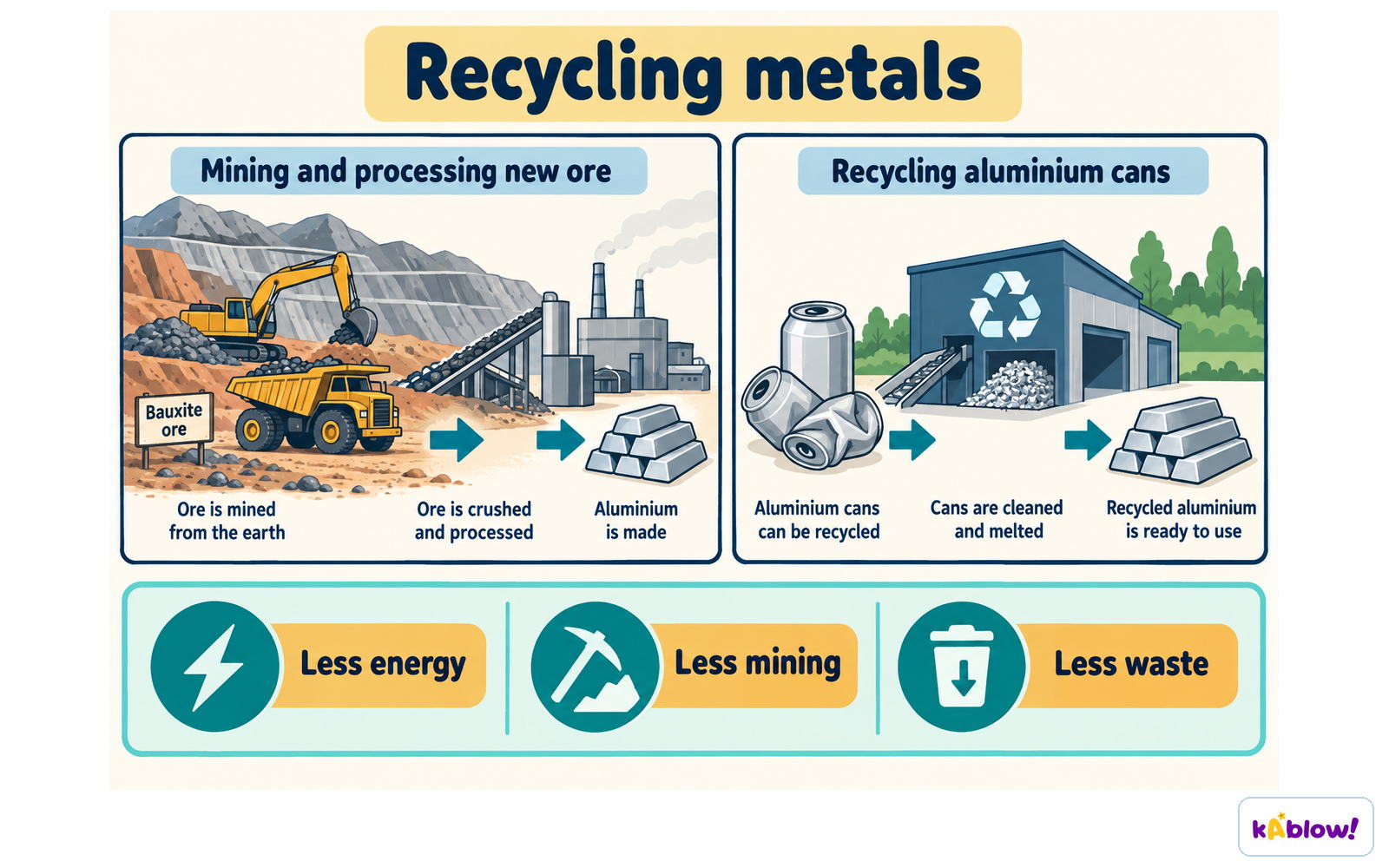
- Aluminium cans can be melted and remade into new cans; recycling saves energy and cost compared to extracting new aluminium.
- Other metals can be recycled similarly.
Recycling aluminium uses less energy and reduces mining and waste compared with extracting new aluminium from ore.
Benefits of Recycling
- Cheaper and more energy efficient than extracting new materials.
- Reduces waste and conserves finite resources.
Particle arrangement in solids, liquids, and gases – relevant to understanding resource extraction and states of matter.
投影片
練習題
免費預覽——56 題中的 8 題。註冊即可查看全部。
1.What does the term 'finite' mean when describing Earth's resources?
Easy- AResources that are limited and could run out
- BResources that are unlimited and renewable
- CResources that are man-made
- DResources that are found only in the ocean
2.Which of the following is NOT a way to use resources more sustainably?
Easy- AReduce
- BReuse
- CRecycle
- DExtract more fossil fuels
3.Which of the following is a fossil fuel?
Easy- AWood
- BCoal
- CWater
- DAluminium
4.How were fossil fuels formed?
Easy- AFrom the decay of dead plants and animals over millions of years
- BFrom volcanic eruptions
- CFrom the compression of rocks
- DFrom the evaporation of seawater
5.Why are fossil fuels considered finite?
Easy- ABecause they take millions of years to form
- BBecause they are found everywhere
- CBecause they can be made quickly
- DBecause they are renewable
6.What does recycling mean?
Easy- AUsing old resources to make new materials
- BThrowing away waste
- CUsing items once and discarding them
- DBurning waste for energy
7.How can aluminium drinks cans be recycled?
Easy- ABy melting them and making new cans
- BBy crushing them and burying them
- CBy burning them to produce energy
- DBy throwing them in the ocean
8.Which of the following materials can be recycled?
Easy- AMetal
- BFossil fuels
- CWater
- DLand
歷屆試題
這個主題的歷屆試題練習即將推出。
即將推出