Metal extraction
邊玩邊學
回答這些題目賺取能量,接著就能釣魚、探索。不需要帳號。
給教育者: 為 Metal extraction(KS3 Science、Chemistry)準備好可直接使用的課程投影片, 複習筆記, 圖表——用於你的課程,或把這個主題當成互動班級活動,讓學習者以即時遊戲的方式進行。
課程筆記
Ores and the Reactivity Series
- Many metals are found in the Earth in rocks called ores.
- To obtain metals, we must extract them from their ores.
- The reactivity series lists metals from most reactive to least reactive.
- Very reactive metals: potassium, sodium. Unreactive metals: gold, silver.
- The method of extraction depends on the metal's position in the reactivity series.
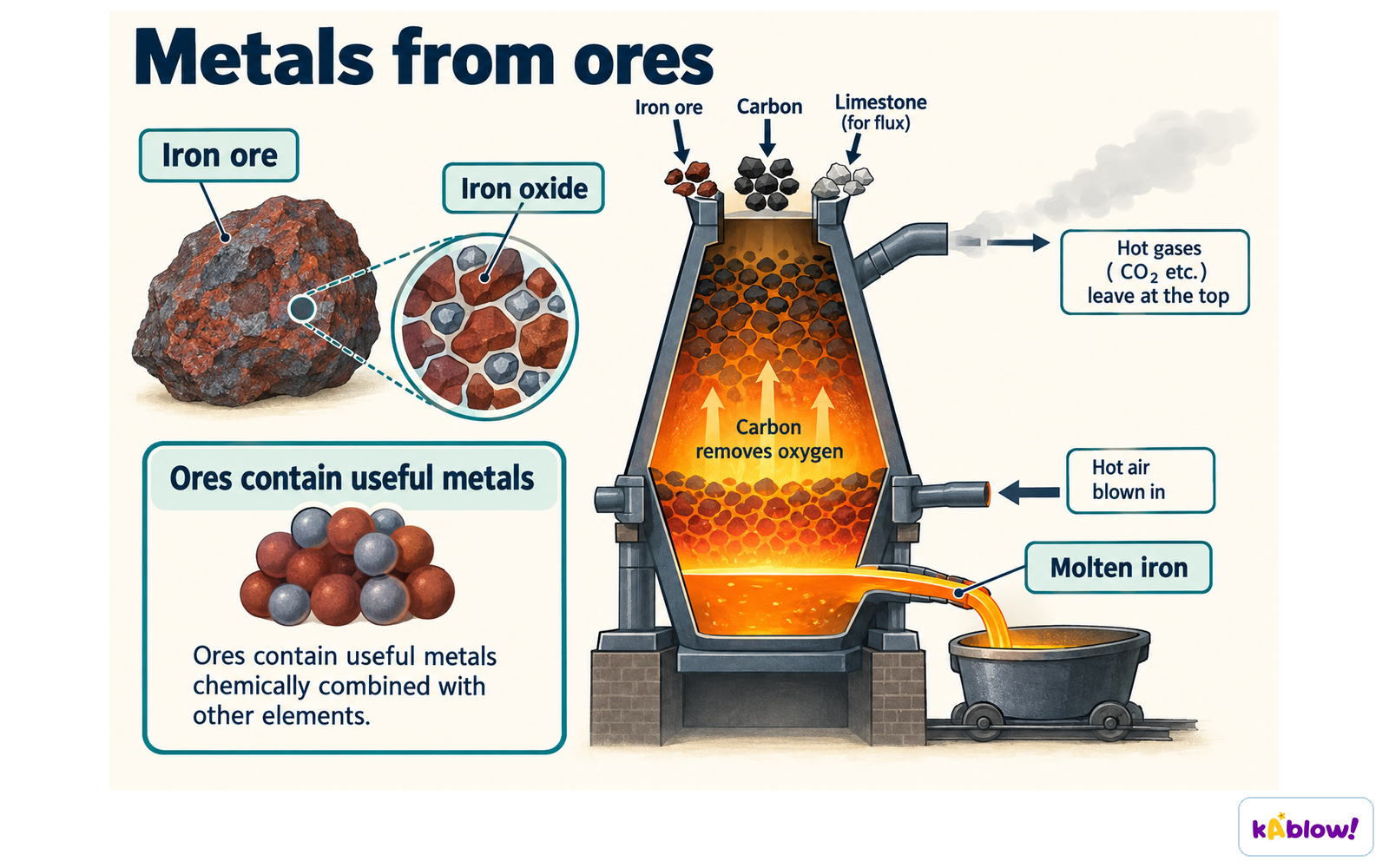
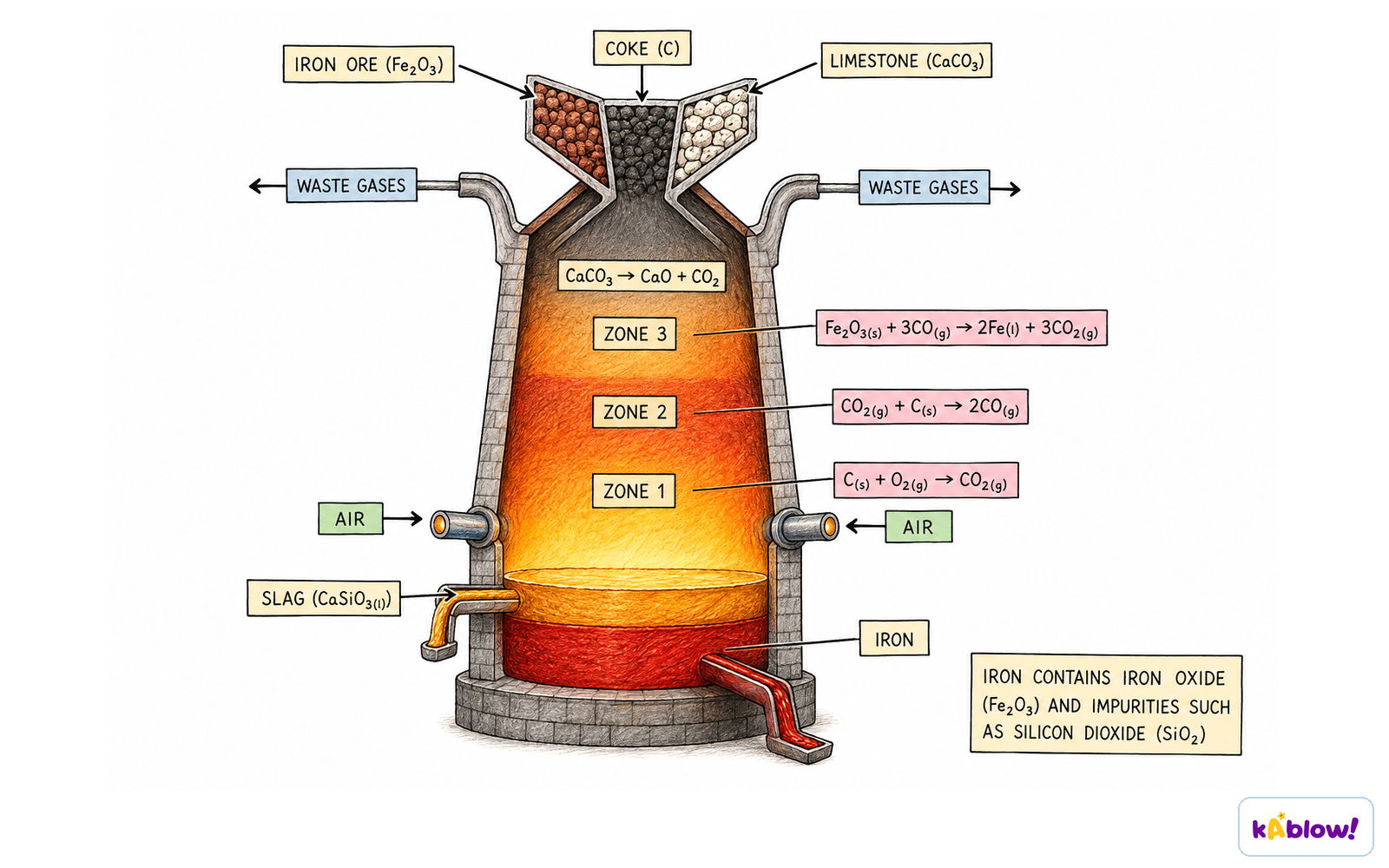
Iron is extracted from iron ore in a blast furnace. Removing oxygen from the iron oxide produces iron.
Extraction Using Carbon (Displacement)
- If a metal is less reactive than carbon, it can be extracted by heating its ore with carbon.
- This is a displacement reaction: carbon displaces the metal from its oxide.
- Example: iron oxide + carbon → iron + carbon dioxide.
- Example: copper oxide + carbon → copper + carbon dioxide.
- The reaction is a reduction because the metal oxide loses oxygen.
Diagram showing the raw materials, zones and reactions of the blast furnace, and the tapping off of slag and molten iron.
Extraction Using Electrolysis
- If a metal is more reactive than carbon, carbon cannot displace it.
- Such metals must be extracted using electrolysis.
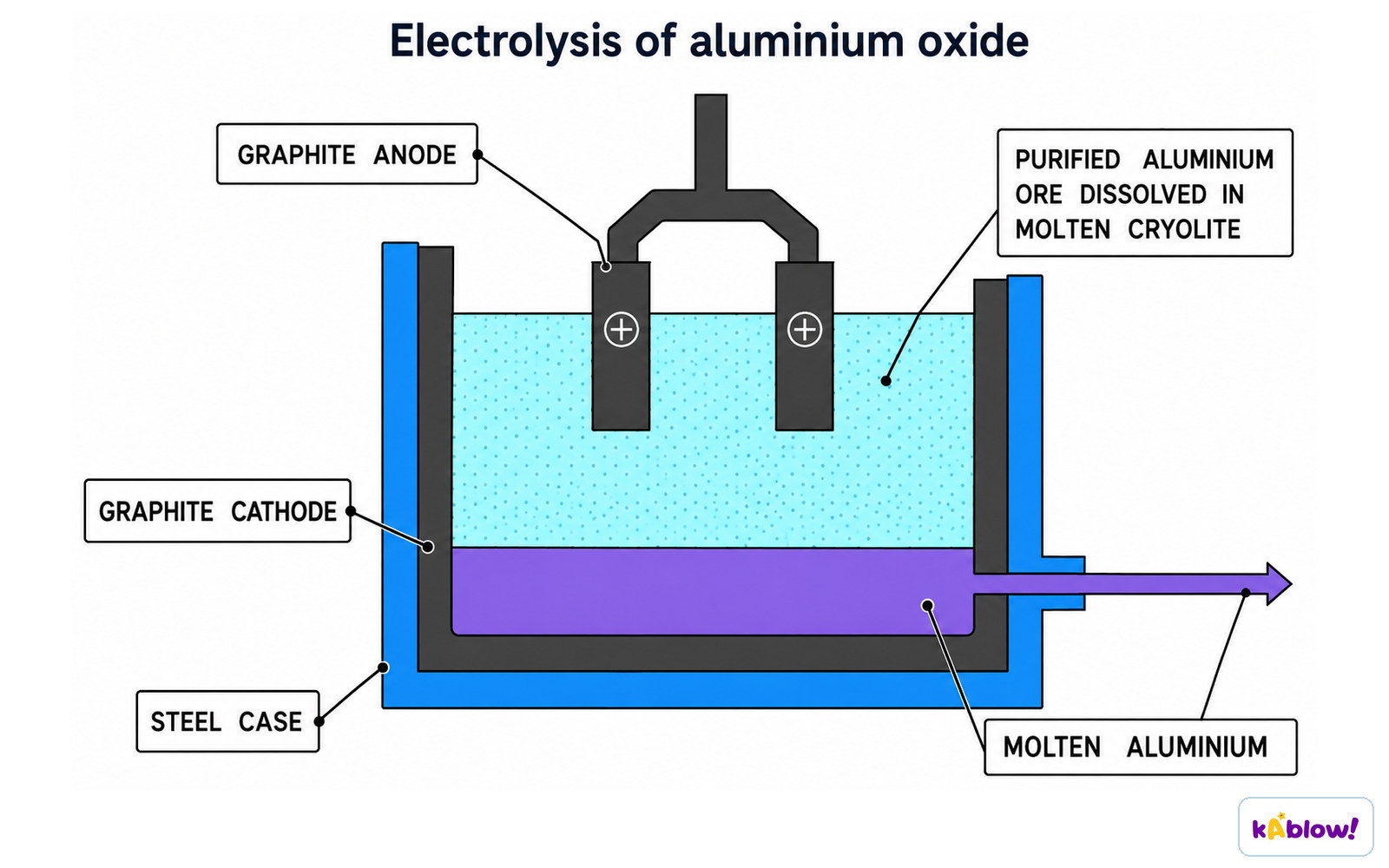
- Electrolysis uses electricity to break down the ore into the metal and other elements.
- Examples: aluminium, magnesium are extracted by electrolysis.
Diagram showing the electrolysis cell for extracting aluminium: graphite electrodes, purified aluminium oxide dissolved in molten cryolite, and molten aluminium tapped off.
Unreactive Metals Found Pure
- Very unreactive metals like gold and silver are found as pure metals in nature.
- They do not need chemical extraction from ores.
Summary of Extraction Methods
- Metals below carbon in reactivity series: extracted with carbon (displacement).
- Metals above carbon: extracted by electrolysis.
- Gold and silver: found pure, no extraction needed.
Atomic structure of iron (Fe), a metal commonly extracted using carbon.
投影片
練習題
免費預覽——40 題中的 8 題。註冊即可查看全部。
1.Which of the following metals can be found as a pure metal in the Earth?
Easy- AGold
- BIron
- CZinc
- DAluminium
2.What is the name for rocks that contain metals?
Easy- AOres
- BMinerals
- CMetals
- DCompounds
3.Which method is used to extract a metal that is less reactive than carbon?
Easy- ADisplacement reaction with carbon
- BElectrolysis
- CFractional distillation
- DFiltration
4.Complete the word equation: carbon + iron oxide → ?
Medium- Airon + carbon dioxide
- Biron + carbon monoxide
- Ciron oxide + carbon
- Dcarbon dioxide + iron oxide
5.Which metal cannot be extracted from its ore by heating with carbon?
Medium- AAluminium
- BIron
- CCopper
- DZinc
6.Why is electrolysis used to extract aluminium instead of carbon?
Medium- AAluminium is more reactive than carbon
- BAluminium is less reactive than carbon
- CCarbon is too expensive
- DAluminium oxide does not react with carbon
7.The reaction: magnesium oxide + carbon → magnesium + carbon dioxide is not possible. Why?
Hard- AMagnesium is more reactive than carbon
- BCarbon is more reactive than magnesium
- CMagnesium oxide is very stable
- DCarbon dioxide is not formed
8.True or false: Carbon can displace calcium from calcium oxide.
Easy- AFalse
- BTrue
- CIt depends on temperature
- DOnly if calcium is molten
歷屆試題
這個主題的歷屆試題練習即將推出。
即將推出