Introduction to magnetism
邊玩邊學
回答這些題目賺取能量,接著就能釣魚、探索。不需要帳號。
給教育者: 為 Introduction to magnetism(KS3 Science、Physics)準備好可直接使用的課程投影片, 複習筆記, 圖表——用於你的課程,或把這個主題當成互動班級活動,讓學習者以即時遊戲的方式進行。
課程筆記
Magnetism as a Non-Contact Force
- Magnetism is a non-contact force – it acts between objects that are not touching.
- A contact force requires objects to be physically touching (e.g., friction).
- Non-contact forces are caused by a field; for magnetism, it is a magnetic field.
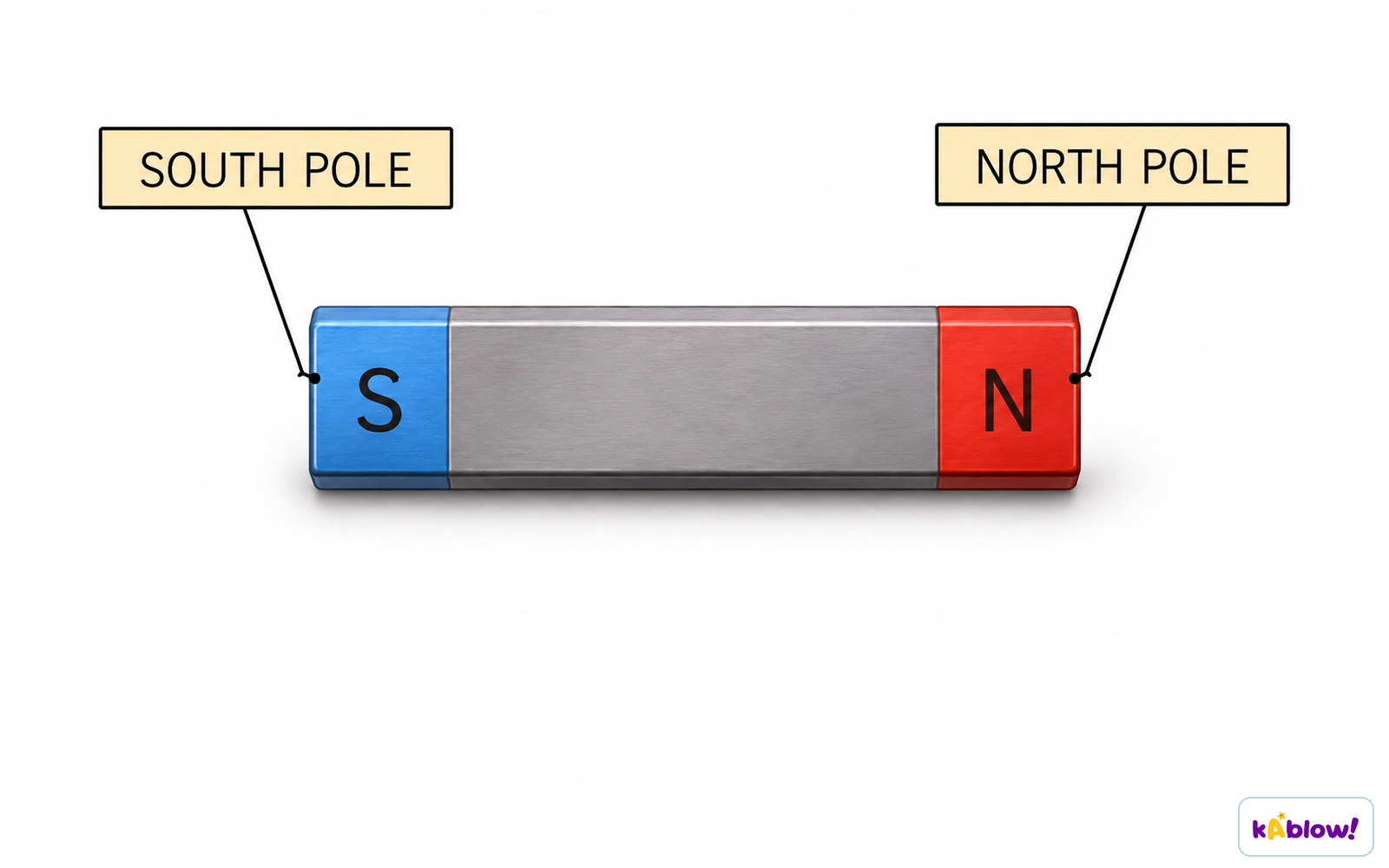
Every magnet has a north pole and a south pole.
Magnetic Field Lines
- Magnetic field lines point away from the North pole and towards the South pole.
- The direction of a field line gives the direction of force on the North pole of another magnet.
- Field lines are closer together where the field is stronger (near the poles).
- Like poles repel; unlike poles attract.
Visualising Magnetic Fields
- Sprinkle iron filings on paper placed over a bar magnet to see the field pattern.
- Iron filings align along the field lines and cluster at the poles (strongest field).
Magnetic Metals
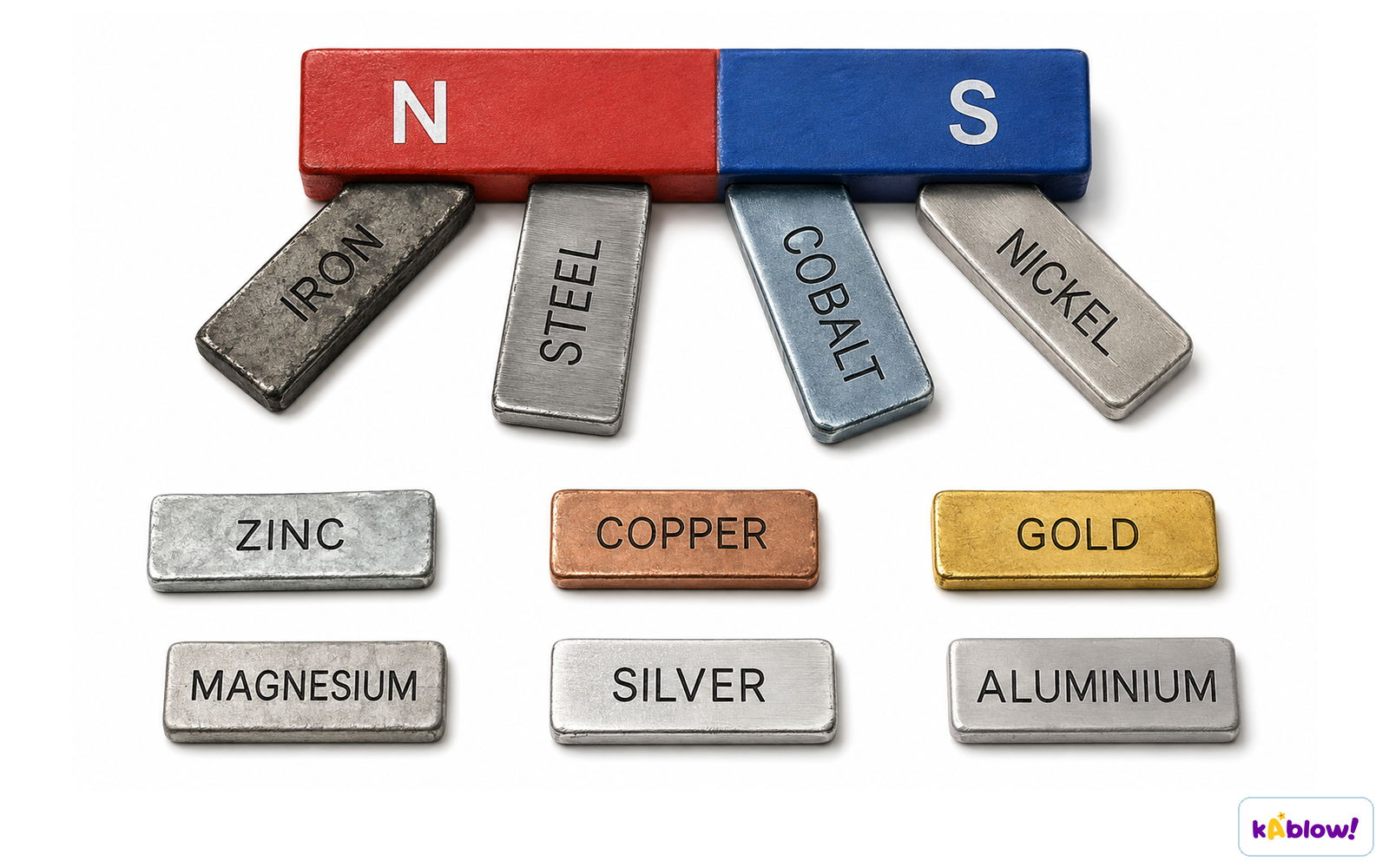
- The three magnetic metals are iron, nickel, and cobalt.
- Steel is magnetic because it contains iron.
- Magnetic metals are attracted to permanent magnets but never repelled.
Magnetic materials (iron, steel, cobalt, nickel) are attracted to a magnet; non-magnetic materials (zinc, copper, gold, silver, magnesium, aluminium) are not.
Permanent Magnets
- A permanent magnet (e.g., bar magnet) produces its own magnetic field.
- A permanent magnet can be demagnetised by: heating, hitting with a hammer, or placing in a reversed magnetic field.
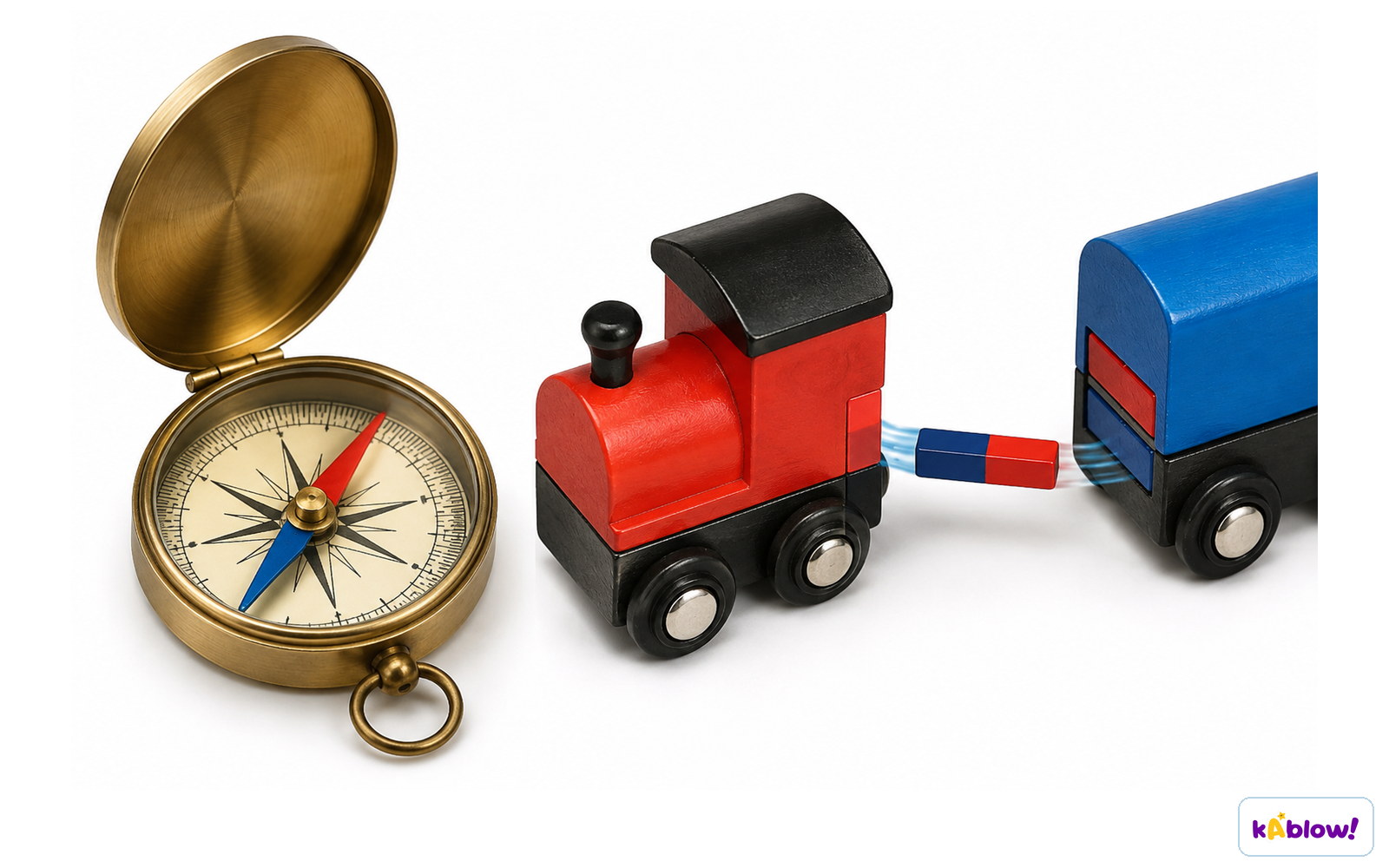
Compasses and toy trains are two examples of the use of permanent magnets.
投影片
練習題
免費預覽——57 題中的 8 題。註冊即可查看全部。
1.Which of the following is a non-contact force?
Easy- AMagnetism
- BFriction
- CAir resistance
- DTension
2.Magnetic field lines point away from the north pole and towards which pole?
Easy- ASouth pole
- BNorth pole
- CEast pole
- DWest pole
3.Which of the following metals is magnetic?
Easy- AIron
- BCopper
- CAluminium
- DGold
4.Two like poles of magnets will:
Easy- ARepel each other
- BAttract each other
- CHave no effect
- DCancel each other
5.Which of the following statements about magnetic field lines is true?
Medium- AThey are closer together where the field is stronger.
- BThey are closer together where the field is weaker.
- CThey point from south to north outside the magnet.
- DThey never form closed loops.
6.A bar magnet is placed under a sheet of paper and iron filings are sprinkled on top. Where will the iron filings concentrate most?
Easy- AAt the poles
- BAt the centre
- CEvenly spread
- DAway from the magnet
7.Which of the following can demagnetise a permanent magnet?
Medium- AHeating it
- BCooling it
- CPlacing it in a weak magnetic field
- DPainting it
8.Which of the following is true about magnetic metals?
Easy- AThey are always attracted to a magnet.
- BThey are always repelled by a magnet.
- CThey can be either attracted or repelled.
- DThey are never affected by magnets.
歷屆試題
這個主題的歷屆試題練習即將推出。
即將推出