Introduction to static electricity
邊玩邊學
回答這些題目賺取能量,接著就能釣魚、探索。不需要帳號。
給教育者: 為 Introduction to static electricity(KS3 Science、Physics)準備好可直接使用的課程投影片, 複習筆記, 圖表——用於你的課程,或把這個主題當成互動班級活動,讓學習者以即時遊戲的方式進行。
課程筆記
Atomic Structure and Charge
- All matter is made of atoms and molecules.
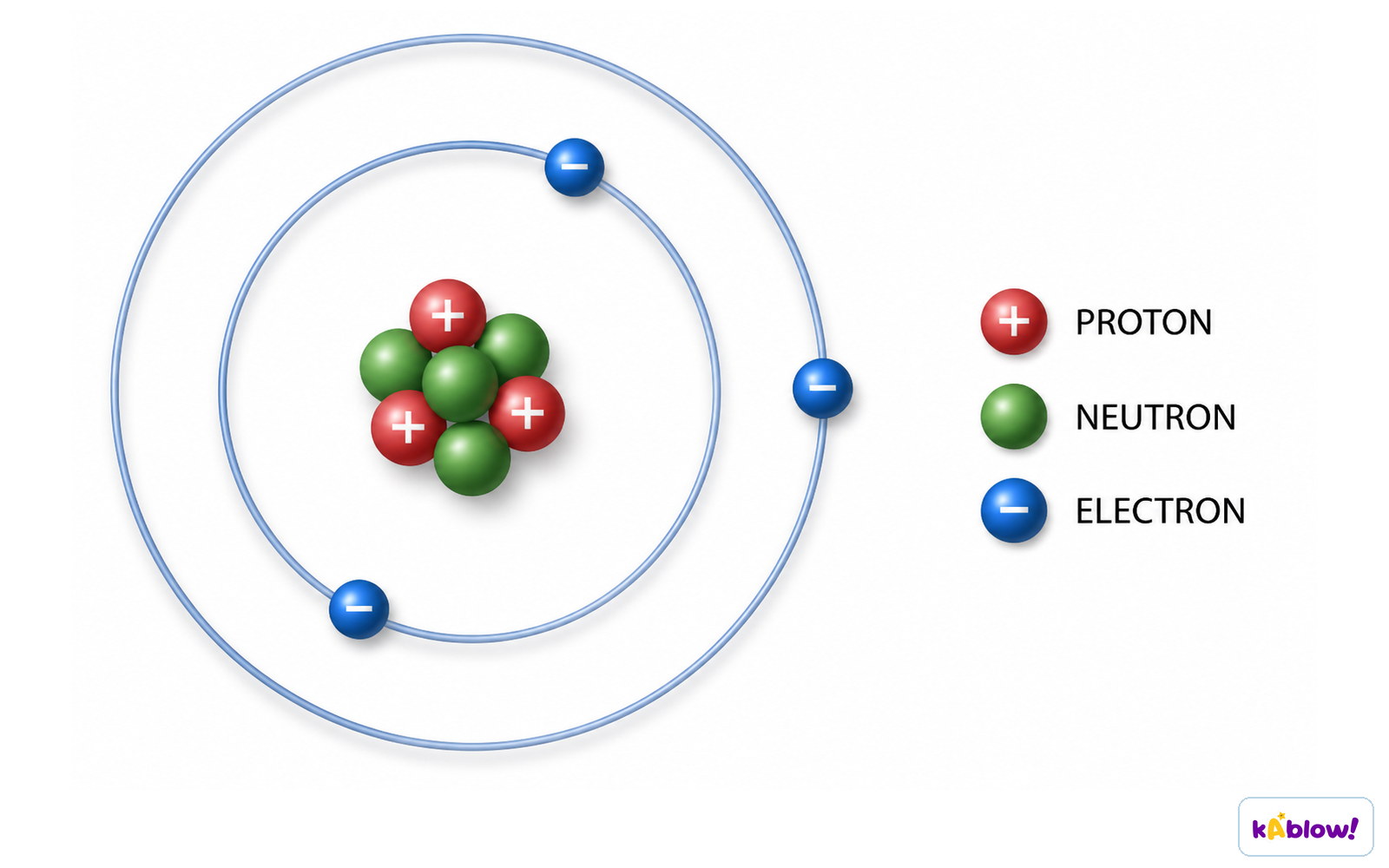
- Atoms have a nucleus containing protons (positive) and neutrons (neutral).
- Electrons (negative) orbit the nucleus.
- Atoms are neutral because they have equal numbers of protons and electrons.
- If an atom loses or gains an electron, it becomes an ion (charged atom).
- Losing an electron gives a positive ion; gaining an electron gives a negative ion.
A neutral atom: protons and neutrons in the nucleus, with electrons in shells around it.
How Objects Gain Static Charge
- Static charge builds up when two objects rub against each other (friction).
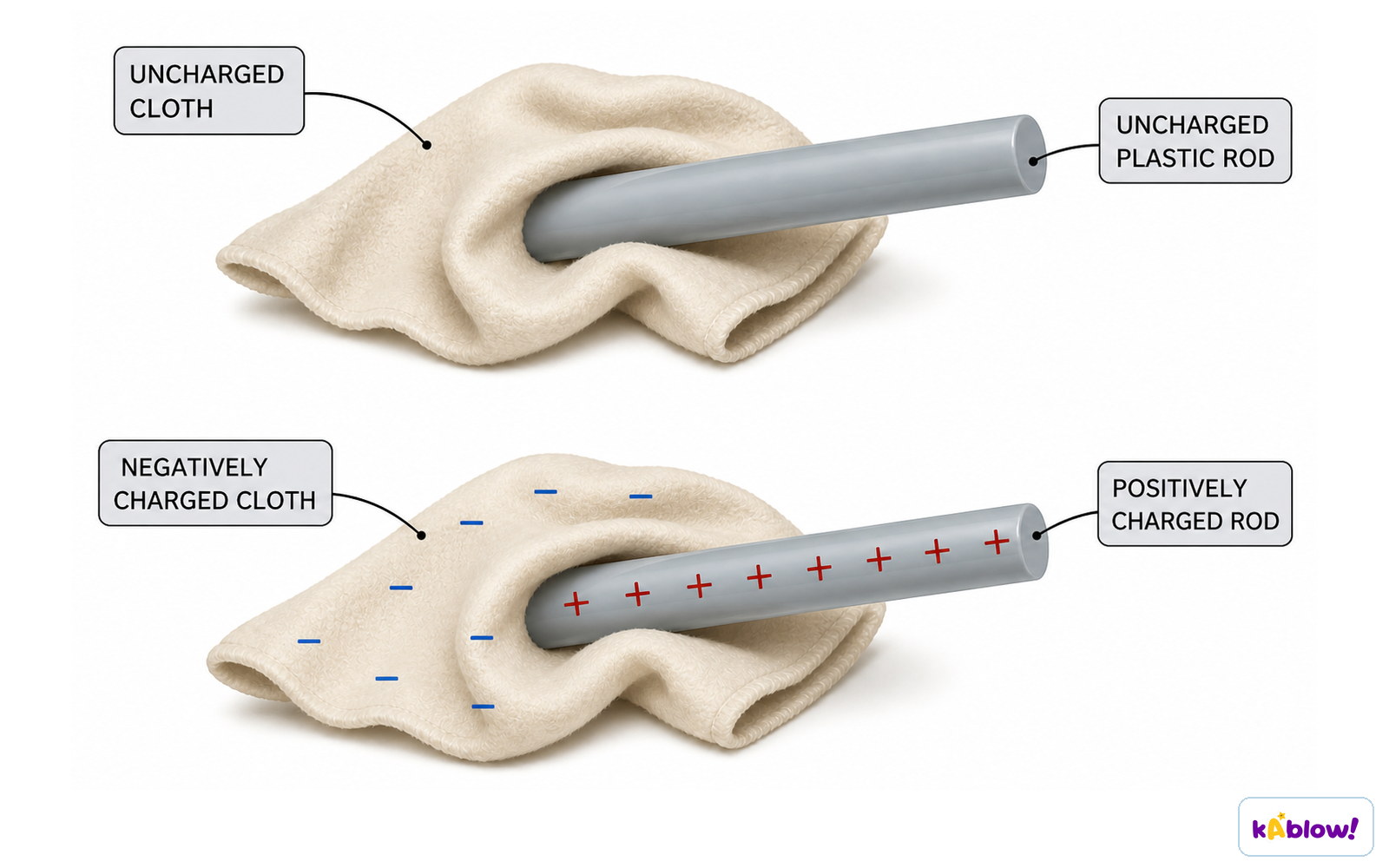
- Friction causes electrons to transfer from one object to the other.
- The object that loses electrons becomes positively charged.
- The object that gains electrons becomes negatively charged.
- Only electrons move; protons stay in the nucleus.
Rubbing transfers electrons: the cloth becomes negatively charged and the plastic rod positively charged.
Electrostatic Forces
- Charged objects exert electrostatic forces on each other.
- These forces are non-contact (they act without touching).
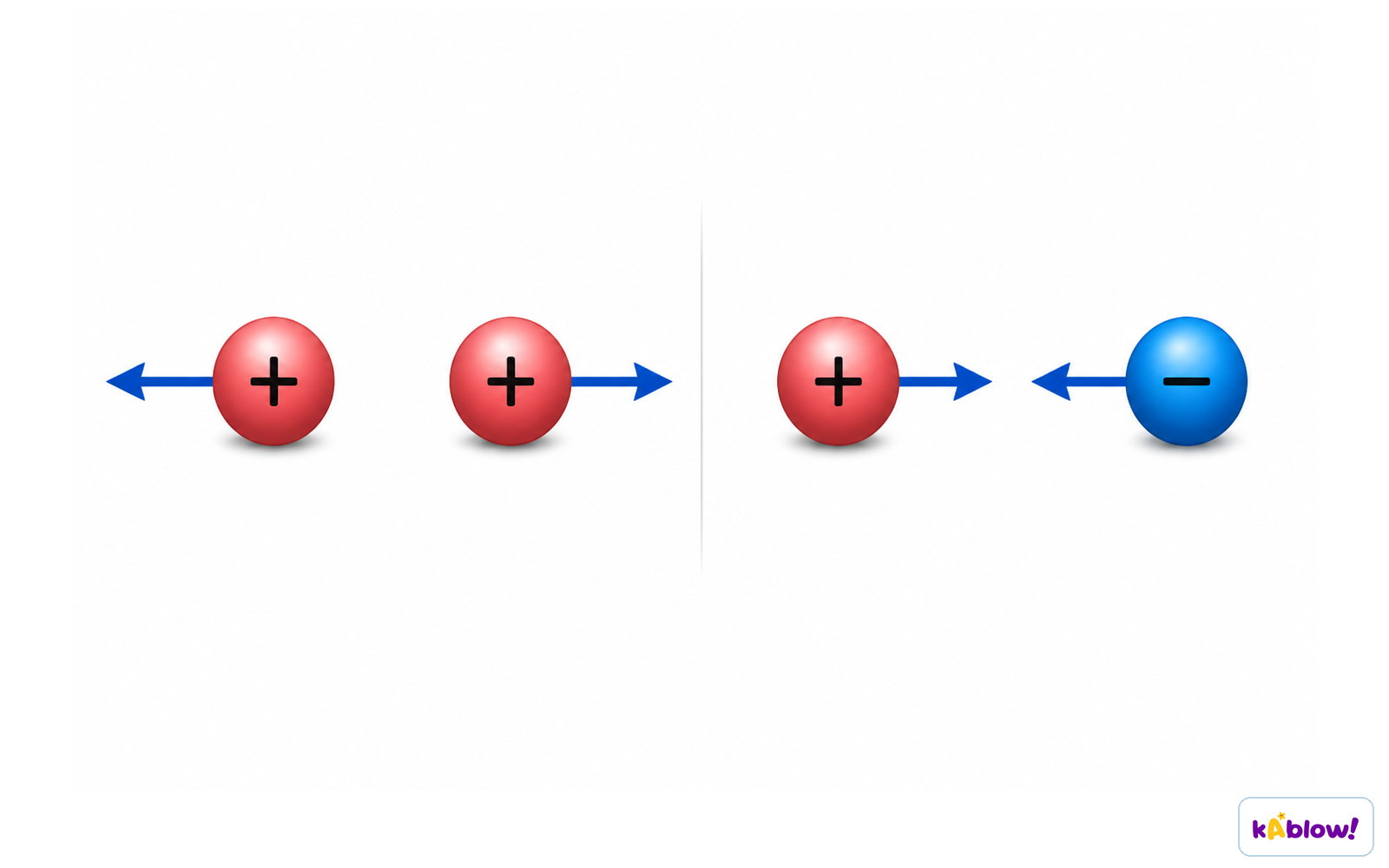
- Like charges repel (positive-positive or negative-negative).
- Unlike charges attract (positive-negative).
Like charges repel each other; opposite charges attract.
Examples of Static Electricity
- Rubbing a balloon on hair transfers electrons from hair to balloon.
- The balloon becomes negatively charged; the hair becomes positively charged.
- The balloon then attracts the hair because opposite charges attract.
- Two negatively charged balloons repel each other.
- A Van de Graaff generator builds up a large static charge.
- If a person touches it (insulated), their hairs gain the same charge and repel, standing on end.
Bohr model of a sodium atom showing nucleus (protons and neutrons) and electron shells.
Particle arrangement in solids, liquids, and gases.
投影片
練習題
免費預覽——59 題中的 8 題。註冊即可查看全部。
1.What are the two particles that make up the nucleus of an atom?
Easy- AProtons and neutrons
- BProtons and electrons
- CNeutrons and electrons
- DProtons, neutrons, and electrons
2.Which particle orbits around the nucleus and has a negative charge?
Easy- AProton
- BNeutron
- CElectron
- DIon
3.Are electrostatic forces contact or non-contact forces?
Easy- AContact forces
- BNon-contact forces
- CBoth contact and non-contact
- DNeither
4.What is the name for an atom that has lost or gained an electron?
Easy- AIsotope
- BMolecule
- CIon
- DProton
5.Why do atoms usually have no overall charge?
Easy- AThey have equal numbers of protons and electrons
- BThey have equal numbers of protons and neutrons
- CThey have more protons than electrons
- DThey have more electrons than protons
6.Which statement is true?
Easy- AA positive charge attracts a negative charge
- BA positive charge attracts a positive charge
- CA negative charge attracts a negative charge
- DLike charges attract
7.Which statement is true about electrostatic charging?
Easy- AProtons are transferred from one object to another
- BElectrons are transferred from one object to another
- CNeutrons are transferred from one object to another
- DBoth protons and electrons are transferred
8.A balloon is rubbed against a jumper and becomes negatively charged. What charge does the jumper become?
Medium- ANegative
- BPositive
- CNeutral
- DIt depends on the material
歷屆試題
這個主題的歷屆試題練習即將推出。
即將推出