Introduction to waves
邊玩邊學
回答這些題目賺取能量,接著就能釣魚、探索。不需要帳號。
給教育者: 為 Introduction to waves(KS3 Science、Physics)準備好可直接使用的課程投影片, 複習筆記, 圖表——用於你的課程,或把這個主題當成互動班級活動,讓學習者以即時遊戲的方式進行。
課程筆記
What are waves?
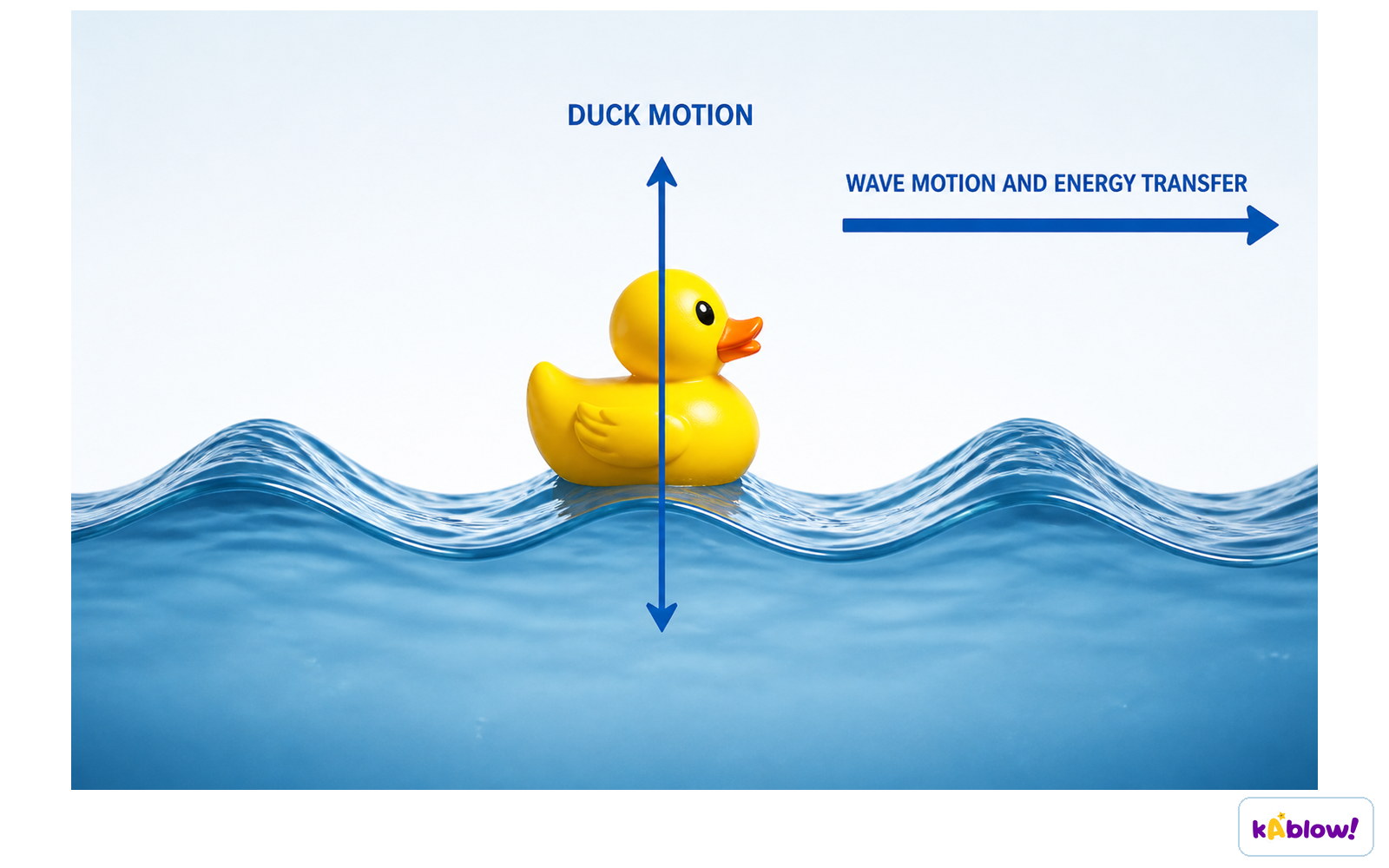
- Waves transfer energy from one place to another.
- Waves do not transfer matter – the particles vibrate but stay in position.
A toy duck bobbing up and down on water waves, illustrating that waves transfer energy but not matter.
Types of wave
- There are two types: longitudinal and transverse.
- Both types are caused by vibrations.
Transverse waves
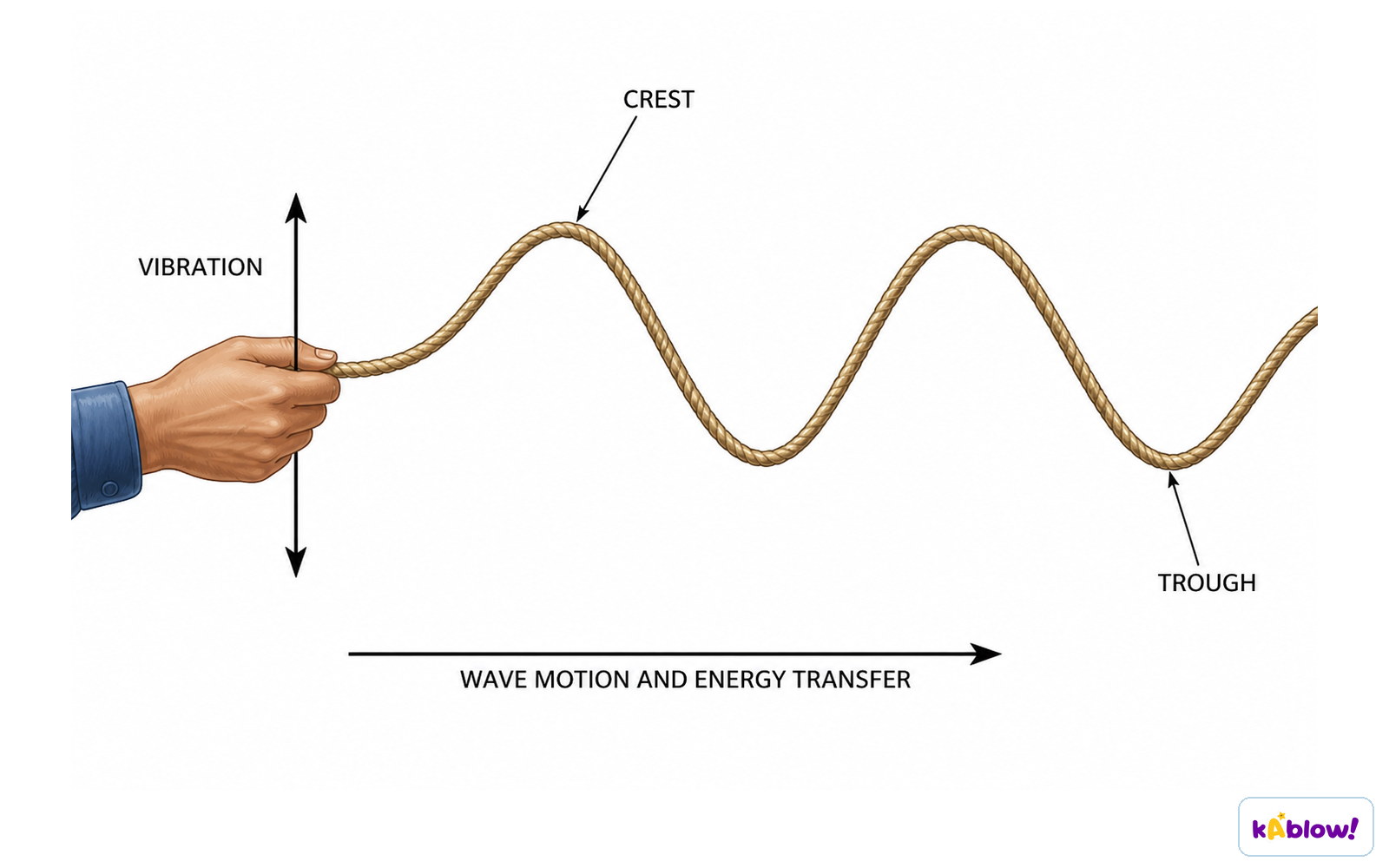
- The vibration is perpendicular to the direction of wave travel.
- Example: waves on a slinky moved side-to-side.
- Key terms: displacement (distance from rest), wavelength (peak to peak), amplitude (maximum displacement).
Transverse wave motion in a rope: the vibration is at 90 degrees to the direction of wave motion and energy transfer, with the crest and trough labelled.
Longitudinal waves
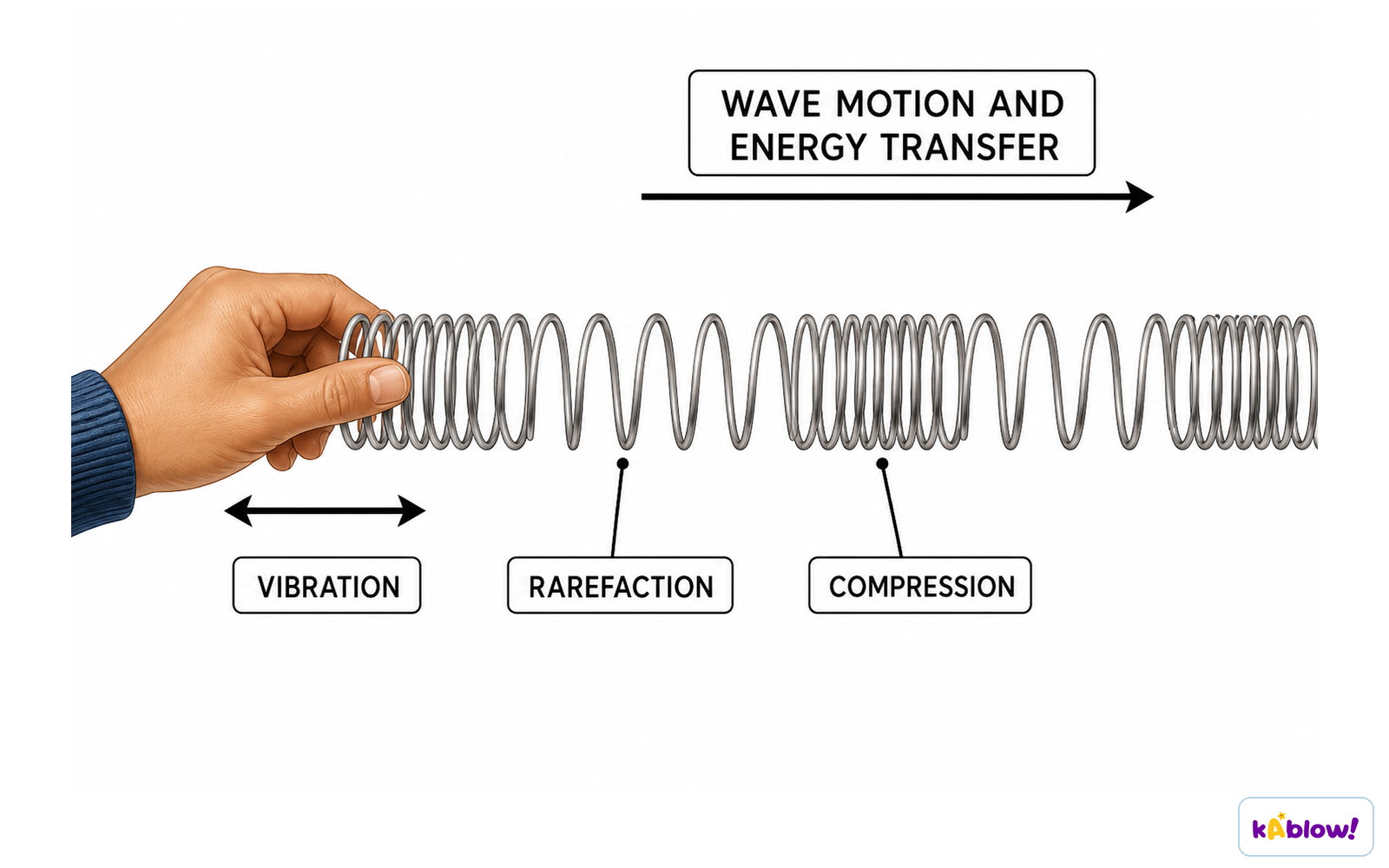
- The vibration is parallel to the direction of wave travel.
- Example: waves on a slinky moved back-and-forth.
- A compression is where particles are closest together.
- A rarefaction is where particles are furthest apart.
Longitudinal wave motion in a spring, showing compression and rarefaction relative to the direction of wave motion and energy transfer.
Similarities and differences
- Similarity: Both transfer energy and are caused by vibrations.
- Difference: In transverse waves, vibration is perpendicular; in longitudinal, vibration is parallel.
投影片
練習題
免費預覽——53 題中的 8 題。註冊即可查看全部。
1.Which of the following best describes what a wave transfers?
Easy- AEnergy
- BMatter
- CBoth energy and matter
- DNeither energy nor matter
2.In a transverse wave, the direction of vibration is:
Easy- Aperpendicular to the direction of wave travel
- Bparallel to the direction of wave travel
- Cthe same as the direction of wave travel
- Dopposite to the direction of wave travel
3.Which of the following is true about longitudinal waves?
Easy- AThey transfer matter along the wave.
- BThe vibration is parallel to the direction of wave travel.
- CThey cannot travel through a medium.
- DThey have crests and troughs.
4.In a longitudinal wave, the region where particles are closest together is called a:
Easy- Ararefaction
- Bcompression
- Ccrest
- Dtrough
5.In a longitudinal wave, the region where particles are furthest apart is called a:
Easy- Acompression
- Brarefaction
- Camplitude
- Dwavelength
6.Which labelled part on a transverse wave diagram represents the maximum displacement from the rest position?
Easy- AWavelength
- BAmplitude
- CCrest
- DTrough
7.The distance between two consecutive peaks on a transverse wave is called the:
Easy- Aamplitude
- Bfrequency
- Cwavelength
- Dspeed
8.Both longitudinal and transverse waves are caused by:
Easy- Avibrations
- Belectric fields
- Cmagnetic fields
- Dparticle movement
歷屆試題
這個主題的歷屆試題練習即將推出。
即將推出